David Sabin-Miller's Website
Home
Papers
Explore Data
Talks
Code

Welcome! My name is David Sabin-Miller, currently an interdisciplinary postdoctoral research fellow at the University of Minnesota's Mathematics department.
My research endeavors to use mathematical techniques to model complex social and societal dynamics in order to better understand the beautiful and sometimes frustrating world around us. My training in applied mathematics provides a powerful toolbox with which to analyze noisy, nonlinear dynamical systems, identifying shared core trends while respecting the inherent nuance and unpredictability of individuals.
My philosophy is that mathematical models should be informable by realistically-attainable data on the micro-scale, and that they should be held accountable by the realism of their implications on the macro-scale. Like how physics discovered the equations of nature underlying our world, I believe it's possible to elucidate many of humanity's strongest psychological patterns underlying our modern complex society. We are exploitable, imperfect creatures, but thankfully, simple awareness often confers some resistance to manipulation, so I want to shine an honest light on how we work, alone and in groups. I believe that understanding ourselves better can make the world a better place.
Despite this, I fully acknowledge that most of human behavior is not (nor, I think, should be) mathematically tractable. However, I also know that the human brain is an incredibly convincing and subtle storyteller, and that we can consciously convince ourselves of convoluted post-hoc justifications for rapid, unconsicous judgments which can be simpler than we'd like to admit. Those areas of unconscious bias are prime candidates for identifying real, tractable leading-order patterns, underneath the stories we tell ourselves. Thus, when looking for projects, I look for systems where humanity exhibits emergent simplicity.
For instance, there is a globally pervasive one-dimensional framing of politics as a simple left-right spectrum, which I see as reflecting the powerful, mass-motivating "us versus them" psychology of tribalism. The distillation of the incredibly complex reality of policy-making into an easily understood (and easily marketable) one-dimensional tug-of-war---while obviously frustrating and inaccurate for many who would desire more nuance from political discourse---suggests to me that mathematical exploration of political reasoning as a one-dimensional dynamical system may provide real, powerful insights despite its ultimate imperfection at capturing any individual's experience.
I hope that mathematically elucidating leading-order patterns in this abstract one-dimensional domain, and extrapolating their implications, can help us understand political influence and polarization, and gain some perspective on attempts to pull our society into further division. Perhaps, also, a mathematical framing might suggest which remedies might be most effective in reclaiming reasonableness.
Below are a few examples of the kind of data I've gathered, for use in data-driven dynamical models.
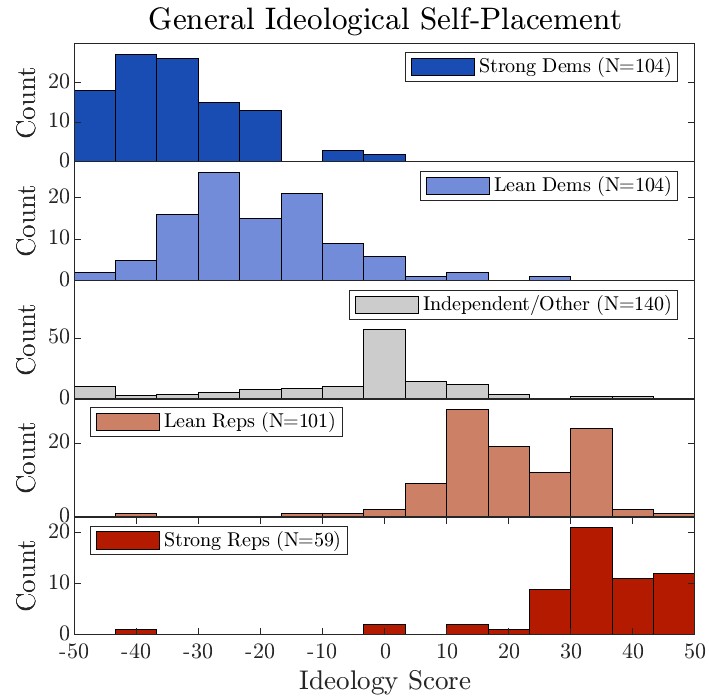 Fig 1 (above): sample image from the nationally-representative Prolific sample shows
the ideological distribution of each political party affiliation,
which exhibit very strong partisan-ideological ordering.
These distributions are the type of macro-scale "targets" against which the outcomes of
micro-scale dynamical models are compared as a minimum requirement for plausibility.
Fig 1 (above): sample image from the nationally-representative Prolific sample shows
the ideological distribution of each political party affiliation,
which exhibit very strong partisan-ideological ordering.
These distributions are the type of macro-scale "targets" against which the outcomes of
micro-scale dynamical models are compared as a minimum requirement for plausibility.
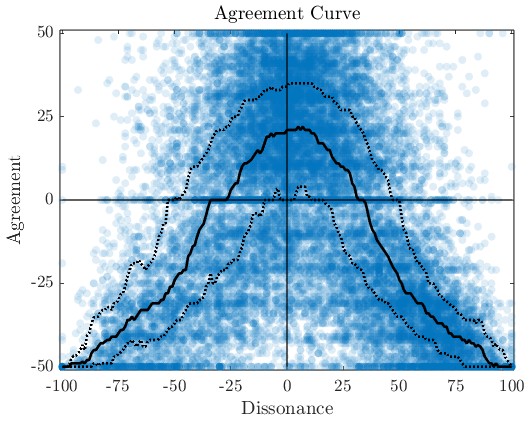 Fig 2 (above): Agreement versus subjectively-experienced ideological dissonance
(distance between the viewer's estimation of the statement's left-right ideology, and their own)
for 23,736 statement-observer events. The black curve is a moving median (with window width of 4),
dotted curves are 25th and 75th percentiles. This is a great example of an emergently simple micro-scale pattern
which underlies a seemingly complex cognitive domain, giving hope for capturing a significant part of most people's general behavior
while leaving plenty of room for unknown nuance/context in any individual observer-statement event, as seen by the significant noisiness of the data.
Fig 2 (above): Agreement versus subjectively-experienced ideological dissonance
(distance between the viewer's estimation of the statement's left-right ideology, and their own)
for 23,736 statement-observer events. The black curve is a moving median (with window width of 4),
dotted curves are 25th and 75th percentiles. This is a great example of an emergently simple micro-scale pattern
which underlies a seemingly complex cognitive domain, giving hope for capturing a significant part of most people's general behavior
while leaving plenty of room for unknown nuance/context in any individual observer-statement event, as seen by the significant noisiness of the data.
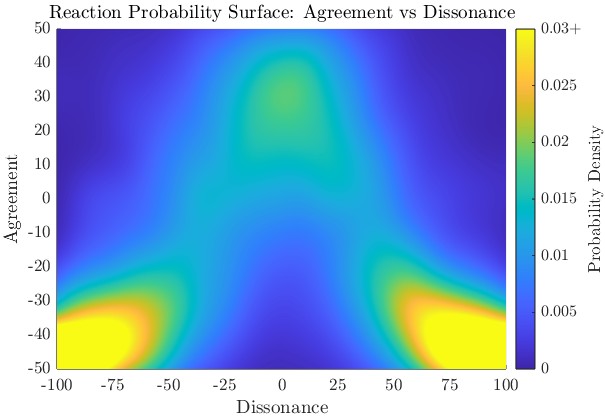 Fig 3 (above): A "reaction surface" constructed from the data in Fig 2, such that each vertical slice represents a
probability distribution for the reaction of a generic individual experiencing that ideological dissonance.
This can then be used to model the reaction tendencies of a large population of individuals in simulations,
rather than conjecturing this core judgment mechanic.
Fig 3 (above): A "reaction surface" constructed from the data in Fig 2, such that each vertical slice represents a
probability distribution for the reaction of a generic individual experiencing that ideological dissonance.
This can then be used to model the reaction tendencies of a large population of individuals in simulations,
rather than conjecturing this core judgment mechanic.